Real-World Deep Learning
Introduction
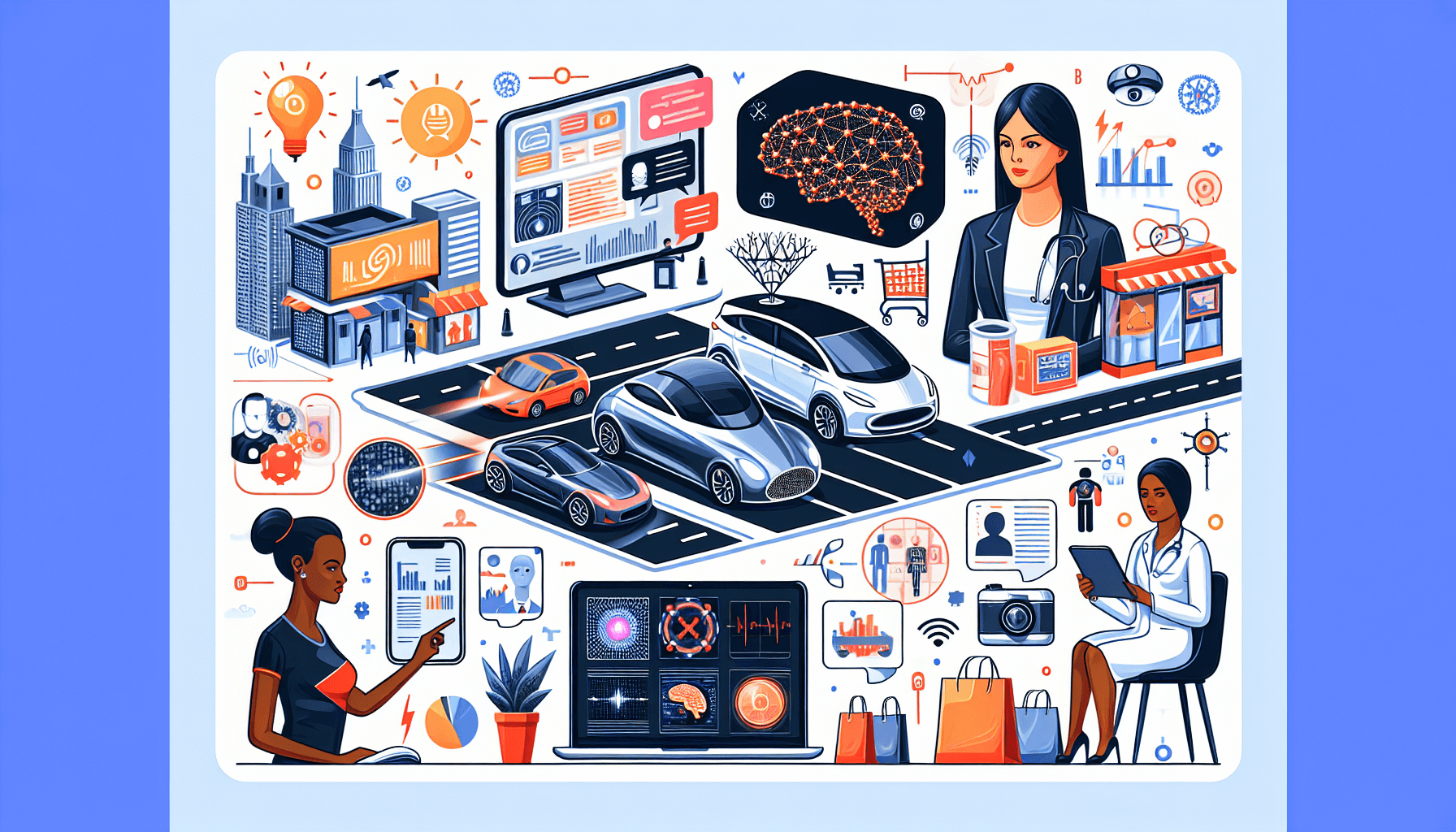
In recent years, Real-World Deep Learning has transitioned from an academic curiosity to a powerful tool that’s reshaping industries worldwide. AI applications are no longer the stuff of science fiction; they are the driving force behind innovations in sectors as diverse as healthcare, finance, and transportation. Among these, deep learning, a subset of artificial intelligence, stands out for its ability to solve complex problems that were once considered insurmountable. From detecting diseases through medical imaging to powering self-driving cars, the reach of deep learning is both wide and profound.
The importance of real-world deep learning cannot be overstated. Its integration into business models has not only enhanced operational efficiencies but also transformed landscapes, leading to success stories such as Google’s AlphaGo, which outperformed human champions in the notoriously challenging game of Go, and IBM’s Watson, which revolutionized data analysis in healthcare. These examples underscore the burgeoning potential of AI applications in today’s industry.
Background
To fully appreciate the real-world impact of deep learning, it’s essential to understand what it entails. Real-world deep learning refers to the application of deep learning models to solve practical problems outside laboratory conditions. Unlike traditional machine learning models, deep learning architectures—particularly neural networks—are capable of handling vast and complex datasets, thereby enabling more accurate and nuanced analyses.
Historically, deep learning’s roots can be traced back to the nascent days of artificial neural networks in the 1940s. However, it wasn’t until the advent of powerful computational resources and the availability of large datasets in the 21st century that deep learning truly came into its own. Innovations such as convolutional neural networks (CNNs) and recurrent neural networks (RNNs) have been pivotal, allowing applications in sectors like image and speech recognition.
Current Trends in Real-World Deep Learning
Today’s landscape is buzzing with trends indicating the rapid integration of deep learning in various industries. In retail, AI applications are optimizing supply chains through predictive analytics, while in healthcare, they assist in the diagnosis and personalized treatment plans. Notably, a success story is found in agriculture where deep learning models predict crop yields with remarkable accuracy, helping farmers to plan better and enhance productivity.
Consider the implementation of deep learning within finance. Case studies reveal its impactful role in fraud detection. Financial institutions leverage AI applications to analyze transactional data, spotting anomalies that might indicate fraudulent activity, thereby saving billions in potential losses.
Industry Insights
Examining how different industries capitalize on deep learning unveils a fascinating array of strategies. The automotive sector, for example, is harnessing real-world deep learning to develop autonomous vehicles safely. Key players such as Tesla employ neural networks for real-time decision-making, teaching cars to react to dynamic road conditions.
However, the path is not without challenges. Industries often grapple with issues like data privacy, computational costs, and the interpretability of AI models. Overcoming these hurdles requires continuous innovation and collaboration among technology companies, policymakers, and educators.
Future Forecast of Deep Learning Applications
Looking ahead, the future of deep learning promises evolution laced with groundbreaking potential. Over the next five to ten years, we anticipate the proliferation of AI applications in personalized medicine, where treatment plans could be derived from a patient’s digital ‘phenotype’. Likewise, the intersection of AI and the Internet of Things (IoT) could lead to smart, adaptive environments that respond intuitively to human needs.
Emerging trends in AI encompass the rise of explainable AI, which aims to make AI decision processes transparent and understandable. As innovation continues, we expect success stories like those of Model-Context Protocols (MCP) demonstrated here Hackernoon Article, to influence future technological developments.
Call to Action
As real-world deep learning continues to forge new horizons, now is the opportune moment to delve deeper into AI applications and discover their full potential. We encourage you to explore these fascinating developments further by reading related articles on advancements like Multi-Modal MCP Servers and their potential here.
Join the discussion by sharing your experiences and ideas on deep learning applications in the comments. Let us continue to inspire and be inspired as we journey into the future of technology together.